Christian Madsen spent the better part of two decades leading across four continents. Large teams, complex markets, the kind of sustained pressure that tests not just strategy but the person responsible for carrying it. For much of that time, the work moved forward in the way it was supposed to. Ambitious targets. Demanding performance plans. Things getting done.
It was only in the later years, as the landscape around him shifted, that something began to surface. Not a personal crisis, but a growing mismatch between what the world was starting to ask of leaders and what the model most of them had been handed was actually built to carry.
“As I stepped into larger, more complex organisations, something evolved alongside it. The world was accelerating. Complexity was compounding. And the gap between what we were asking of organisations and of ourselves, and what we were humanly equipped to carry, was widening. It wasn’t that the leadership we had practised was wrong. It was that it hadn’t followed the times. Not at the pace and importance the moment now required.”
Covid didn’t create that gap. But it made it impossible to look away from.
“The moment that stays with me most clearly came during Covid. Facing something genuinely unprecedented, I watched our collective reflex kick in almost immediately: tighten control, push harder, protect the bottom line at any cost. I understood it. The instinct was entirely what we had been trained to do. But I couldn’t shake what I was witnessing beneath it. Our cultures, our leadership habits, our entire operating logic had been so shaped by the pursuit of delivery that when the moment called for something different, more human, more courageous, more genuinely collective, we didn’t have the architecture for it.”
What followed for Christian wasn’t a clean intellectual reckoning. He is honest about that.
“I won’t pretend the question I was sitting with then was a tidy one. It was a mix of things converging: what Covid had left in me, the cracks I had started to see as the world sped up and got more complex, and my own evolving relationship to leadership and what I wanted it to be. I was asking myself what this was all pointing toward.”
What pulled him forward wasn’t certainty. It was a distinction that shifted the shape of the question entirely.
“The frustration I felt wasn’t telling me that leadership was broken beyond repair. But it did indicate that core elements of the leadership model we had refined across decades to drive performance no longer served what we face now. That distinction mattered enormously. It shifted my whole view forward.”
From there, his thinking began to move in two directions at once. Inward, toward the quality of human capacity that leaders bring to their work. And outward, toward the conditions that make it possible for organisations to move with more fluidity, more interconnection, more ease inside constant change.
“The transformation needed moves in two directions at once: drawing more fully on human capacity, and then that enabling organisations to work in ways that are more fluid, more interconnected, and more at home in constant change, in polarities and paradox, rather than in opposition to them. Growing your capacity as a leader is what makes it possible to begin fostering those conditions in your organisation.”
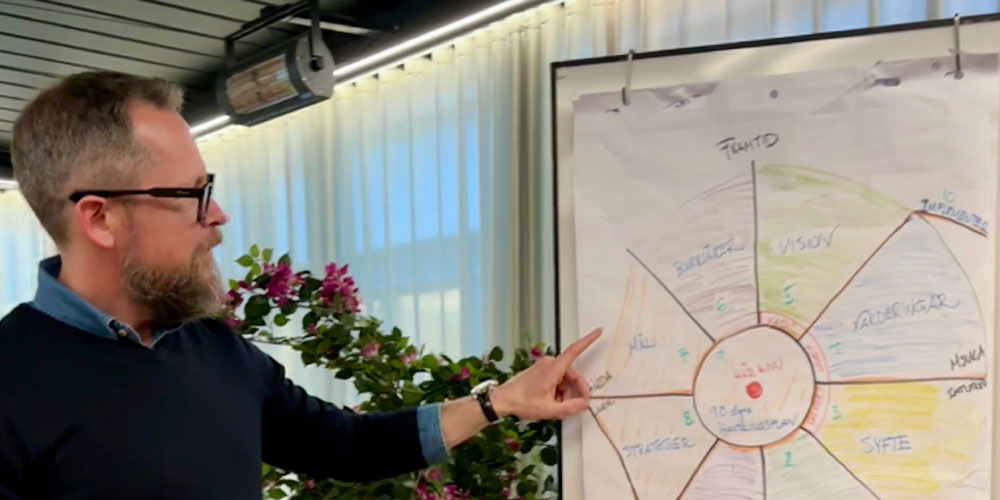
That shift extended inward too. The more Christian explored it, the more it asked something of him personally.
“In recent years I have gone through a fundamental shift in how I understand leadership and myself within it. From relying primarily on competence, answers and structural control, the baseline many of us were taught, toward something grounded in human capacity. I have seen this play out in turnarounds, in crisis, in teams that were technically capable but humanly fragmented. The difference between what is possible and what is actually achieved almost always comes down to the human conditions beneath the plan.”
It brought him to a paradox he has learned to sit with rather than resolve.
“Leadership holds a paradox I have come to appreciate deeply: it is not about you, and it is entirely about you. It asks for profound inner responsibility in service of something larger than oneself.”
That paradox is one we recognise at CFL. Not because we have resolved it, but because we have learned to work from inside it. It is not a comfortable place. But it is where the most honest and most useful leadership work tends to happen.
Christian joins us not because he has arrived at answers. But because of the quality of the questions he is still carrying, and the seriousness with which he carries them.
We are glad the paths crossed.
Companions for Leadership